
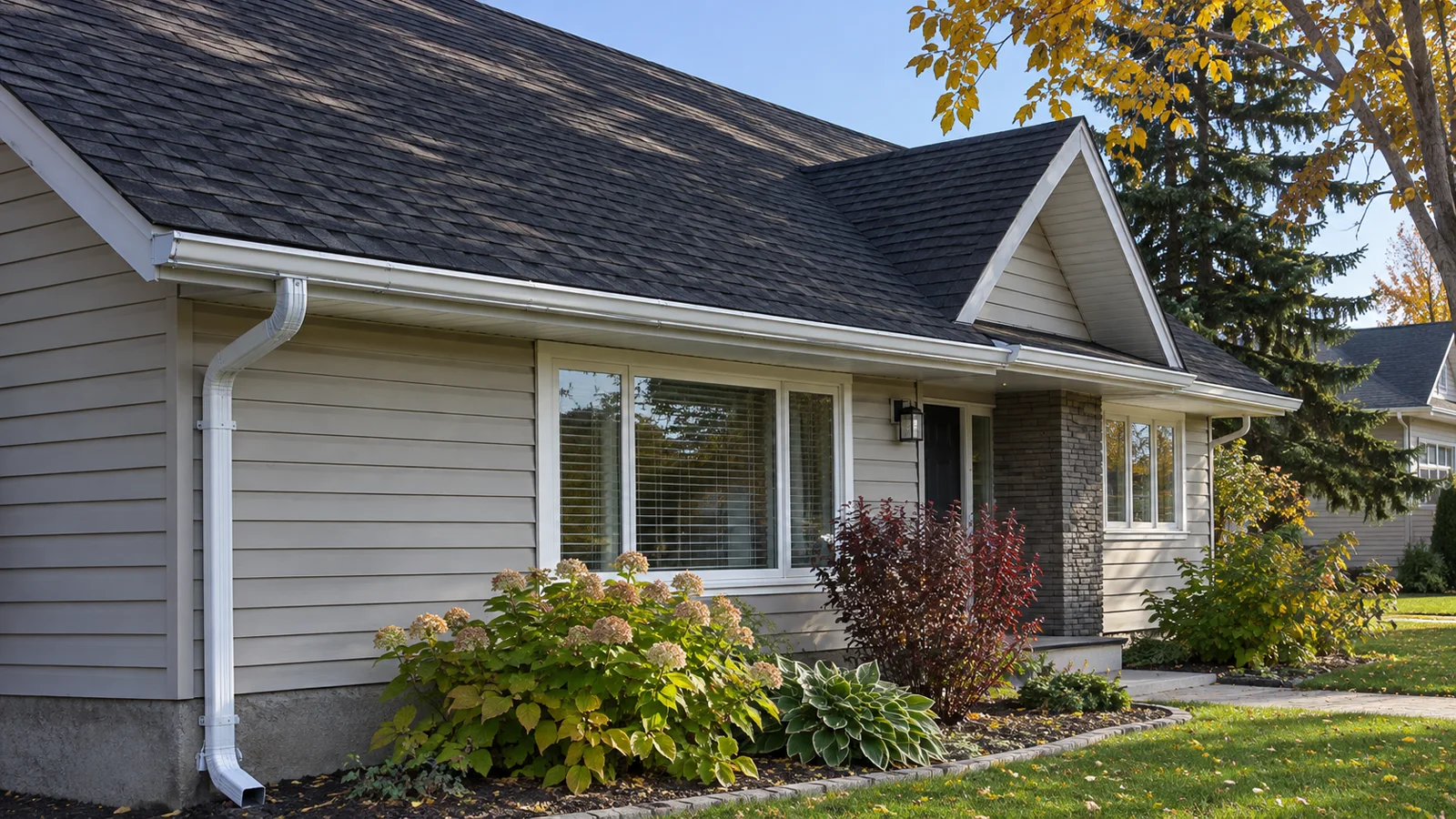
A useful roof maintenance routine starts with three habits: look for changes in spring and fall, check again after significant storms, and keep a record of what needs attention. You do not need to diagnose every mark yourself. Clear observations and timely follow-up help a roofer distinguish maintenance, repair and an aging roof that may still be worth preserving.
Use this checklist from the ground and inside the home. Leave roof access and close inspections to a qualified professional.
Start a roof record
Keep roof paperwork together: installation date, shingle product, warranty, repair invoices and inspection photos. If the installation date is unknown, record what you do know rather than guessing.
Take repeat photos from the same ground-level viewpoints. A dated image is more useful when you can compare it with the same section a few months later. Note any work on solar panels, vents or other rooftop equipment so the roofer has the full history.
Spring: check what winter left behind
Once the roof is visible, look for changes in the roofline, shingle surface and drainage. IKO’s spring maintenance guidance includes having the roof checked for loose or missing shingles and exposed nails.
- Compare the roofline and visible shingle courses with your earlier photos.
- Look for missing, displaced or noticeably lifted shingles.
- Note debris, branches or material collected in roof valleys.
- Check for sagging, detached or overflowing gutters from the ground.
- Observe whether downspouts are carrying water away as intended.
- Look inside for new ceiling stains or damp finishes.
- Record places where ice repeatedly accumulated over winter.
Arrange professional follow-up for changes you cannot explain. Repeated winter ice and moisture problems may need an attic or roof-system assessment, not just a shingle repair.
Fall: prepare drainage and resolve open items
Before snow hides the roof, review anything left unresolved from the year. IKO’s fall checklist calls attention to deterioration, loose or missing shingles and flashing condition.
- Arrange appropriate removal of leaves and debris from gutters and drainage paths.
- Look for shingle pieces or increasing granular material near downspout outlets.
- Have loose flashing or visible damage assessed rather than covering it with a general-purpose coating.
- Check that previous repair items were completed and documented.
- Note branches near or touching the roof and arrange suitable tree work.
- Check interior areas where moisture has appeared before.
- Save photos of the roof before winter conditions return.
Clean drainage is useful, but it does not resolve every winter issue. Natural Resources Canada identifies attic air leakage and insulation as important factors in ice-dam prevention.
After hail or strong wind: document the change
A storm check is most useful when it records what changed and when. Photograph the property from safe ground-level positions and save the date of the event.
- Look for shingle pieces or other new debris on the ground.
- Photograph visible changes to shingles, gutters and roof accessories.
- Check inside for fresh stains or water entry.
- Compare the roof with your earlier photos.
- Arrange an inspection if you suspect damage, even if you do not see a leak.
Dents on a vent do not automatically diagnose the shingles. Our hail-damage-versus-normal-wear guide explains why patterns, timing and a roof inspection matter.
What do your observations mean?
Use the existing guides to understand the symptom, then ask for an assessment where needed:
When should you ask about preservation?
If the roof is aging but remains generally sound, ask whether preservation is appropriate for its actual condition. Rejuvenation is not a way to skip repairs, replace missing material or solve attic moisture problems.
Ask what product is proposed, what evidence supports the recommendation, what your shingle manufacturer says about that treatment and what the written coverage includes. Keeping records makes that discussion more useful than relying on age or appearance alone.
KEEP A RECORD
Download Your Roof Maintenance Record
Keep seasonal checks and follow-up together in a fillable two-page checklist and log. Save a copy for each year or print it for your records.
Turn your roof observations into a clear next step. Try the Alberta Roof Planner for a personalized checklist and questions to bring to your local team.
Make the next step clear
For active damage or water entry, arrange a qualified roofing assessment. For questions about preserving aging asphalt shingles after required repairs, find your local Bright Green Roof provider.
A good maintenance record does not need to be complicated. A date, a useful photo and a completed follow-up are a strong start.