
Why Are My Roof Shingles Curling or Lifting?
Curled or lifted shingles don't automatically mean you need a new roof. The important question is why they're moving—and whether the shingles are still healthy enough to repair or preserve.
Asphalt shingles can curl or lift because of age-related drying, cold temperatures, wind, failed seals, improper fastening, moisture, ventilation problems or movement underneath the roofing system. Mild curling on an otherwise sound roof can be very different from widespread curling, cracking or buckling.
You look up at your roof and notice something doesn't look quite right.
Maybe a few shingle corners are turning upward. Maybe one section looks slightly wavy. Or perhaps individual tabs seem to be lifting away from the roof.
The first thought is usually:
Not necessarily.
Curling, lifting and buckling can all make asphalt shingles look distorted, but they don't always mean the same thing. Sometimes you're seeing temporary cold-weather behaviour. Sometimes the shingles are beginning to show their age. And sometimes the visible problem is actually being caused by ventilation, moisture, installation or the roof deck underneath.
The important thing is figuring out why the shingles are moving before deciding what to do about it.
Curling, Lifting and Buckling Are Not the Same Thing
From the driveway, all three can look like “my shingles aren't sitting flat anymore.” But the distinction can help identify what's actually happening.

Curling or Cupping
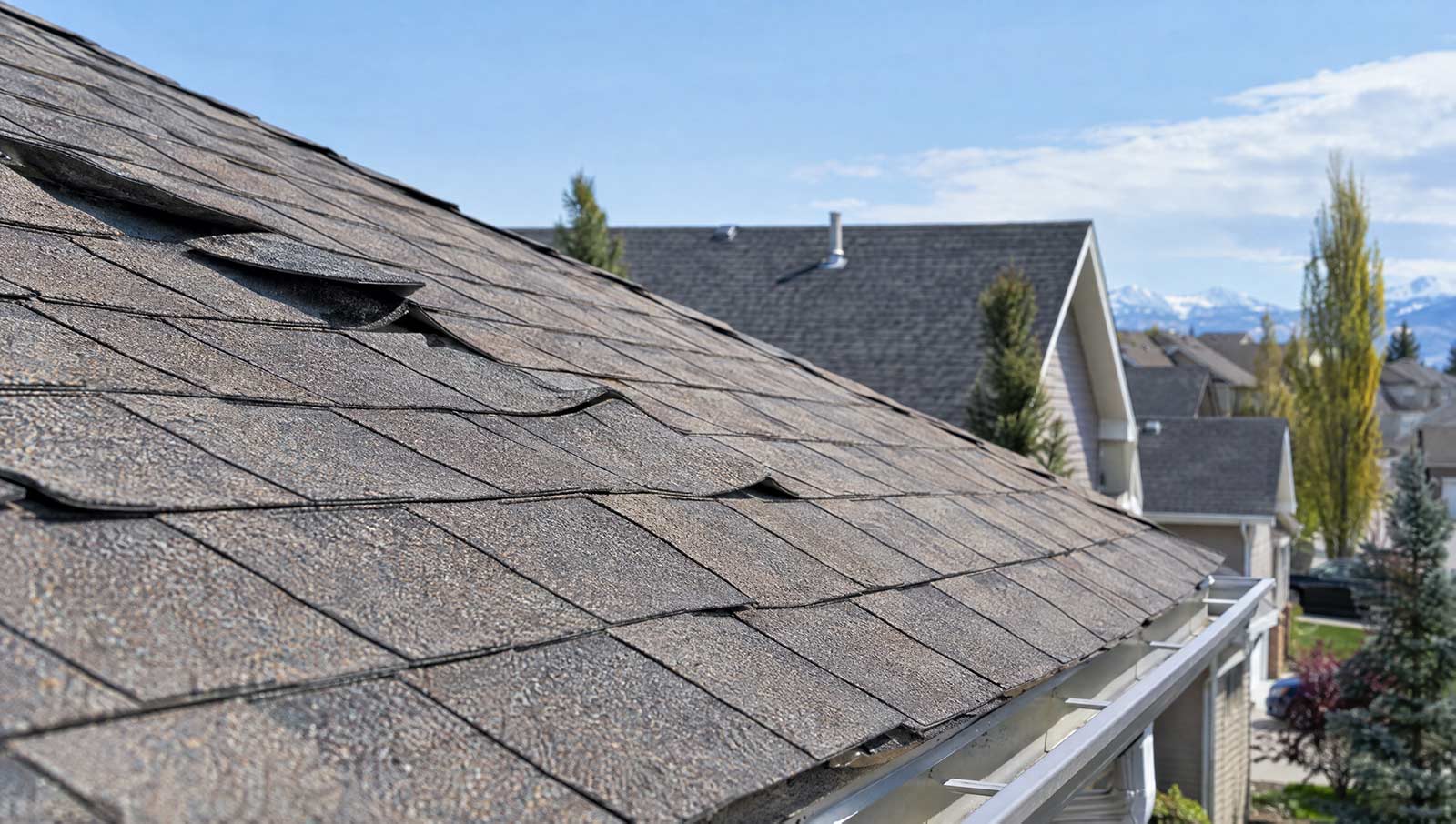
The shingle itself is changing shape. Corners or exposed edges may begin turning upward as the asphalt ages and loses flexibility. A slightly turned edge is very different from widespread severe curling.
Lifting
The shingle may still be relatively flat, but part of it is no longer lying firmly against the roof. Wind, failed adhesive seals, improper fastening or installation problems can all contribute.
Buckling
Buckling often looks like a ridge, hump or wave. The shingle may not be the real problem at all—wrinkled underlayment, moisture, deck movement or uneven decking can show through the surface.
Why Do Asphalt Shingles Start Curling as They Age?
An asphalt shingle spends its entire life exposed to the elements.
In Alberta, that means strong summer sun, sub-zero winter temperatures, snow, wind, hail and large temperature swings throughout the year.
Over time, the asphalt portion of the shingle changes. Oils and lighter components are gradually lost as the material weathers and oxidizes. The shingle becomes less flexible than it was when it was new.
Eventually, that loss of flexibility can begin showing up physically.
Edges may curl. Small cracks may appear. Granules may loosen more easily. The shingle may become increasingly brittle.
This doesn't happen to every roof at exactly the same age.
A 12-year-old roof with good installation, ventilation and moderate exposure may be in excellent condition while another roof of the same age has already begun showing obvious wear.
That's why we put much more weight on condition than birthday.
Can Cold Weather Make Shingles Curl?
Yes—and not every cold-weather curl means the roof is failing.
Cold asphalt is less flexible than warm asphalt. Shingles can sometimes develop a shallow upward curve along their exposed edges during very cold weather and flatten again when temperatures rise.
So if your roof looks slightly different on a brutally cold January morning, watch what happens when conditions change.
Poor Ventilation Can Affect What Happens on the Roof
Your shingles don't exist independently from the rest of the roofing system.
When attic ventilation isn't working properly, excess heat and moisture can accumulate underneath the roof. Moisture can contribute to movement in wood decking or underlayment, and that movement may show through the shingles as waves, ridges or buckling.
That's one reason we don't recommend diagnosing an entire roof from a single photo.
Sometimes the visible shingle is the problem.
Sometimes it's simply revealing a problem underneath.
Why Are Only Some of My Shingles Curling?
Roofs don't age evenly.
One side of your home may receive substantially more direct sunlight. Some sections may stay shaded or damp longer. Wind exposure varies. Snow can sit differently across roof planes. Valleys, ridges, dormers and penetrations all create different conditions.
So it isn't unusual for one slope—or even one section—to start showing age before the rest.
A south- or west-facing section that has taken years of strong afternoon sun may look noticeably different from a protected area.
That doesn't necessarily mean anything was installed incorrectly. It does mean a proper assessment should look at the entire roof, not just whatever section is easiest to see from the driveway.
How Alberta's weather actually damages your roofCan Wind Cause Shingles to Lift?
Absolutely.
Asphalt shingles rely on mechanical fasteners and adhesive seal strips to resist wind uplift.
If a shingle never sealed properly, the adhesive bond later fails or the shingle wasn't fastened correctly, wind can begin lifting the exposed edge.
This is particularly important after a major storm.
If several lifted tabs suddenly appear after strong winds, don't automatically assume you're seeing normal aging. It may be localized wind damage and should be assessed accordingly.
Can Improper Installation Cause Curling or Lifting?
Yes. Not every distorted shingle is old.
Potential installation-related causes include improperly driven nails, fastening in the wrong location, wrinkled underlayment, uneven decking or other substrate problems.
That's especially worth investigating when the roof is relatively new, the problem appeared shortly after installation, the distortion follows obvious ridges or only certain installation areas are affected.
In those cases, treating the surface without correcting the underlying cause misses the point.
Can Curled Shingles Be Repaired?
Sometimes.
If the problem is isolated, the rest of the roof is healthy and the shingles haven't become too brittle, individual affected shingles may be repairable or replaceable.
Lifted tabs caused by a sealing issue may also sometimes be addressed individually.
But older brittle shingles become harder to repair safely because accessing one shingle often requires manipulating the material around it.
As curling becomes widespread, chasing individual shingles around the roof becomes less practical.
Can Curled Shingles Be Rejuvenated?
Sometimes—but the condition of the shingle matters enormously.
If an asphalt roof is beginning to dry out and lose flexibility but the shingles are still structurally sound, the roof may still be worth assessing for rejuvenation.
That does not mean roof rejuvenation is a magic way to flatten badly curled shingles.
And it cannot correct distortion caused by rotten decking, moisture problems, poor ventilation, installation defects, failed fasteners or structural movement underneath the roof.
The cause needs to be understood first.
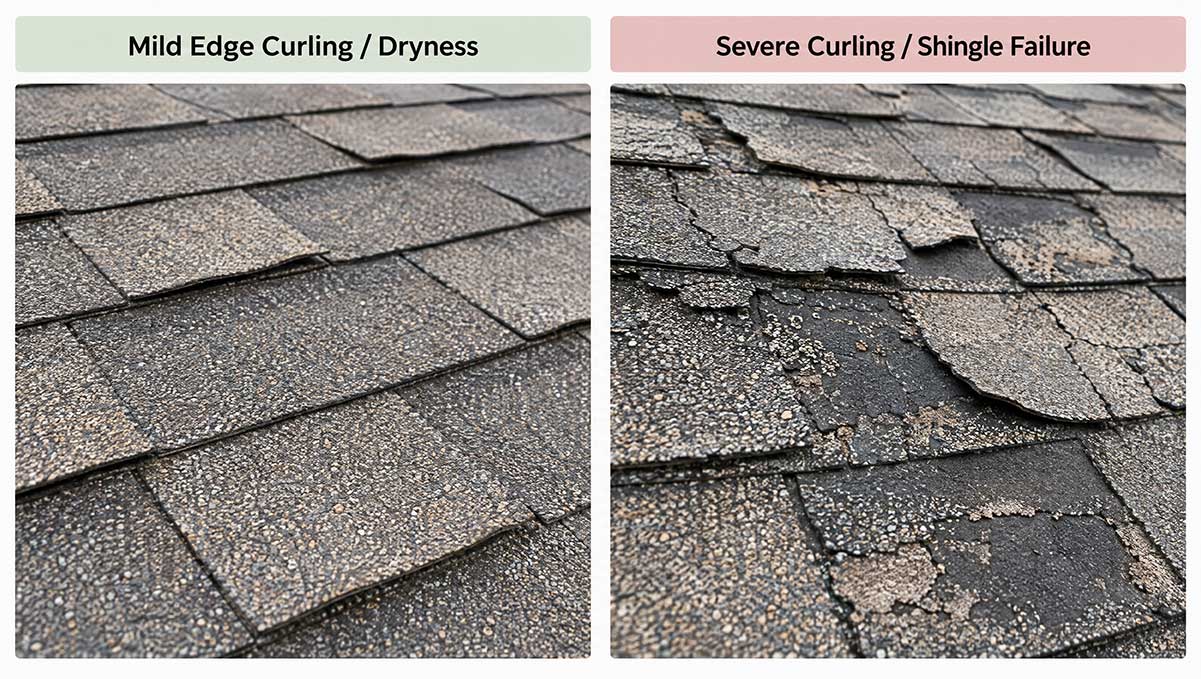
Early Aging
Slight edge curling, dryness or reduced flexibility while the shingles remain intact and structurally sound may still leave an opportunity to preserve the roof.
Advanced Deterioration
Severe curling, cracking, widespread granule loss, missing shingles, leaks or structural problems can mean there is simply too little healthy roofing material left to preserve.
The best time to preserve a roof is generally before deterioration becomes severe.
How to tell if your roof may still qualify for preservationWill Roof Rejuvenation Make Curled Shingles Flat Again?
This isn't the way we'd recommend thinking about the service.
The purpose of rejuvenation is to preserve a roof that still has usable life left—not cosmetically force severely distorted shingles back into their original shape.
A slightly curled edge on an otherwise sound aging shingle is one thing.
A roof covered in deeply curled, cracked or deformed shingles is another.
If someone promises that spraying a badly failed roof will simply make all of those shingles “new again,” we'd be skeptical too.
The better question is:
Are the shingles still structurally healthy enough that preserving them now could help delay further age-related deterioration and replacement?
That requires an inspection.
When Does Curling Mean the Roof May Be Too Far Gone?
There isn't one magic amount of curl that automatically condemns a roof.
We look at the whole picture.
A few mildly curled edges on an otherwise intact roof may simply be something worth monitoring or assessing.
Widespread severe curling combined with cracking, significant granule loss, missing shingles, leaks or soft decking is much more concerning.
The distinction matters because curling is a symptom, not a complete diagnosis.
If your roof is showing several different failure signs at once, rejuvenation may no longer be the sensible option.
That's why we've always taken the position that roof rejuvenation isn't for every roof.
If yours is too far gone, you should be told that before anyone sells you a treatment.
What Should You Do If You Notice Your Shingles Curling?
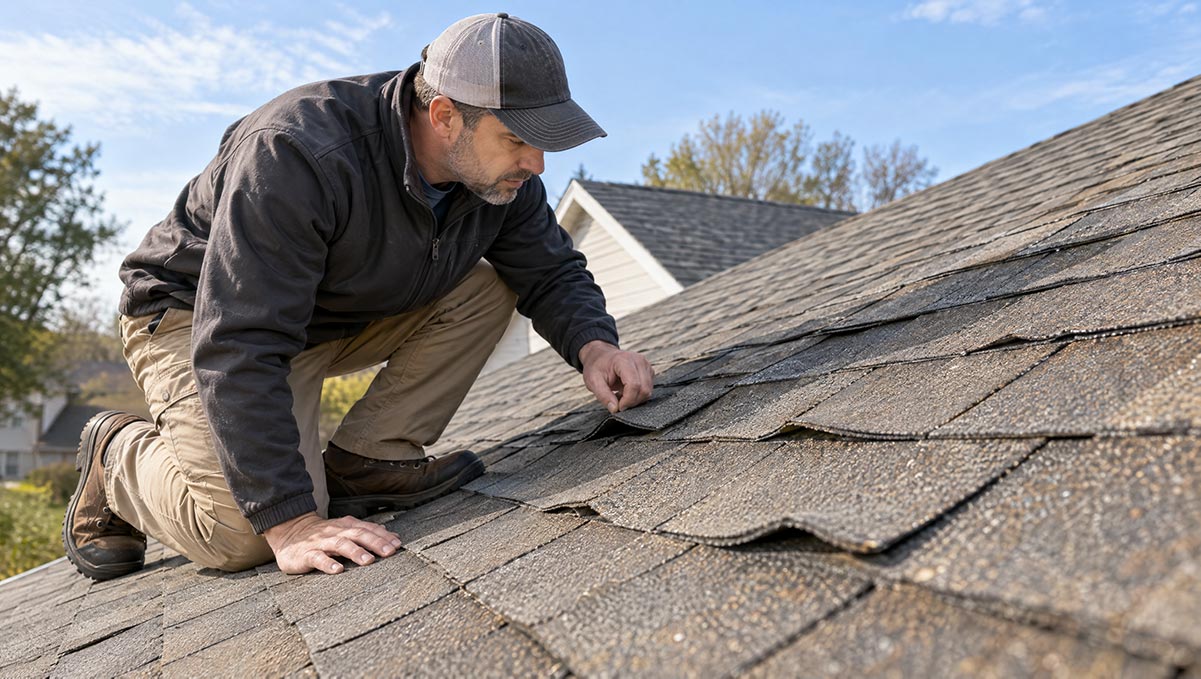
Don't climb onto the roof just to investigate.
You can learn a surprising amount safely from the ground.
Look From Several Angles
Morning or evening shadows can make raised edges much easier to see.
Look For Other Symptoms
Cracking, missing shingles, granule loss, waves or leaks provide important context.
Watch For Change
If the curling is new, permanent or getting worse, have the roof assessed before deterioration progresses further.
The important thing is to identify the cause while you still have options.
A small repair today is better than a large repair later. And if the shingles are aging but still healthy enough to preserve, addressing them earlier gives you a much better opportunity than waiting until curling, cracking and brittleness become severe.
Curling vs. Granule Loss: Which Comes First?
There isn't a fixed order.
Both are common signs of an aging asphalt roof, and they can develop at different rates.
Some roofs start shedding noticeable granules while the shingles remain relatively flat. Others become visibly dry or begin curling before homeowners notice much material in the gutters.
That's why one symptom shouldn't be used by itself to decide whether a roof needs replacement.
Why are my roof shingles losing granules?Curled Shingles Don't Automatically Mean “Replace the Roof”
If you see a couple of shingle edges starting to curl, don't panic.
But don't ignore them for five years either.
Find out why they're curling.
That's the window where roof rejuvenation makes the most sense.
Not after the roof has failed. Before it gets there.
Understand What Your Roof Is Telling You
How Long Do Asphalt Shingles Last in Alberta?
See why age is useful context, but condition is ultimately more important.
Read the guideWhy Are My Shingles Losing Granules?
Learn what's normal, what isn't, and when granule loss becomes a bigger concern.
Learn about granule lossDoes My Roof Need Rejuvenation or Replacement?
Compare the signs that suggest preservation may still make sense with the signs that point toward replacement.
Compare the signsFrequently Asked Questions About Curling and Lifting Roof Shingles
Why are the edges of my roof shingles curling up?
Shingle edges can curl because of age-related changes in the asphalt, cold-weather movement, moisture, ventilation problems or other roofing-system conditions. On an older roof, permanent curling can be a sign that shingles have become drier and less flexible.
Are curled shingles a sign that I need a new roof?
Not automatically. A few mildly curled shingles can sometimes be repaired or may indicate early aging. Widespread severe curling combined with cracking, leaks, missing shingles, heavy granule loss or decking problems is much more likely to point toward replacement.
Can curled shingles be fixed without replacing the roof?
Sometimes. Isolated affected shingles may be repairable or replaceable if the surrounding roofing remains in good condition. If curling is widespread because the roof has become brittle with age, individual repairs may no longer be practical.
Can roof rejuvenation help curled shingles?
A roof showing very early age-related curling may still qualify for rejuvenation if the shingles remain structurally sound. Rejuvenation should not be expected to repair severely curled or broken shingles, nor can it fix decking, ventilation, moisture or installation problems underneath them.
Will curled shingles flatten out in warm weather?
Some temporary cold-weather curling can flatten as temperatures rise. Permanent age-related curling generally does not simply disappear when summer arrives.
What is the difference between curling and buckling shingles?
Curling usually refers to the shingle itself turning or changing shape around its edges. Buckling usually appears as a ridge or wave and is often associated with movement or distortion underneath the shingle, such as wrinkled underlayment, moisture or roof-deck movement.
Why are my new roof shingles lifting?
New shingles may lift if they haven't fully sealed yet, especially after cold-weather installation. Improper fastening, installation problems and wind can also cause raised tabs. If the shingles remain lifted after warm conditions have given them time to seal, have the installer inspect them.
Can poor attic ventilation cause shingles to curl or buckle?
It can contribute. Poor ventilation can allow excess heat and moisture to accumulate beneath the roof deck. Moisture-related movement in the deck or underlayment can then appear as buckling or distortion at the roof surface.
Can wind lift asphalt shingles without blowing them off?
Yes. A shingle can lose or partially lose its adhesive seal and begin lifting before it actually blows off the roof. If lifting appears after a windstorm, have the affected area inspected rather than assuming it is normal aging.
Should I glue curled shingles back down?
Don't treat curling as a cosmetic DIY problem until you know why it is happening. A raised tab caused by a failed seal is different from an old brittle shingle, and both are different from a roof buckling because of movement underneath.
At what age do asphalt shingles start curling?
There isn't a universal age. Installation, shingle quality, ventilation, sun exposure, weather and maintenance all affect how quickly a roof ages. Two roofs installed in the same year can look very different 10 or 15 years later.
Is shingle curling worse in Alberta?
Alberta roofs experience strong UV exposure, freezing temperatures, wind, hail and large seasonal temperature swings that can contribute to roofing wear. Climate is only one factor, though. Installation, ventilation, orientation and shingle quality also matter.
Should I have curling shingles inspected now or wait?
If the curling is permanent, new or getting noticeably worse, have it inspected rather than waiting. The goal isn't automatically to replace the roof—it's to determine whether you're seeing a minor repair, temporary movement, an underlying roofing-system problem or an aging roof entering the preservation window.
The Earlier You Understand the Problem, the More Options You Usually Have
If your shingles are beginning to curl, dry out or lose flexibility but the roof is still structurally sound, it may be worth finding out whether preservation is still an option.
See If Your Roof May Qualify