
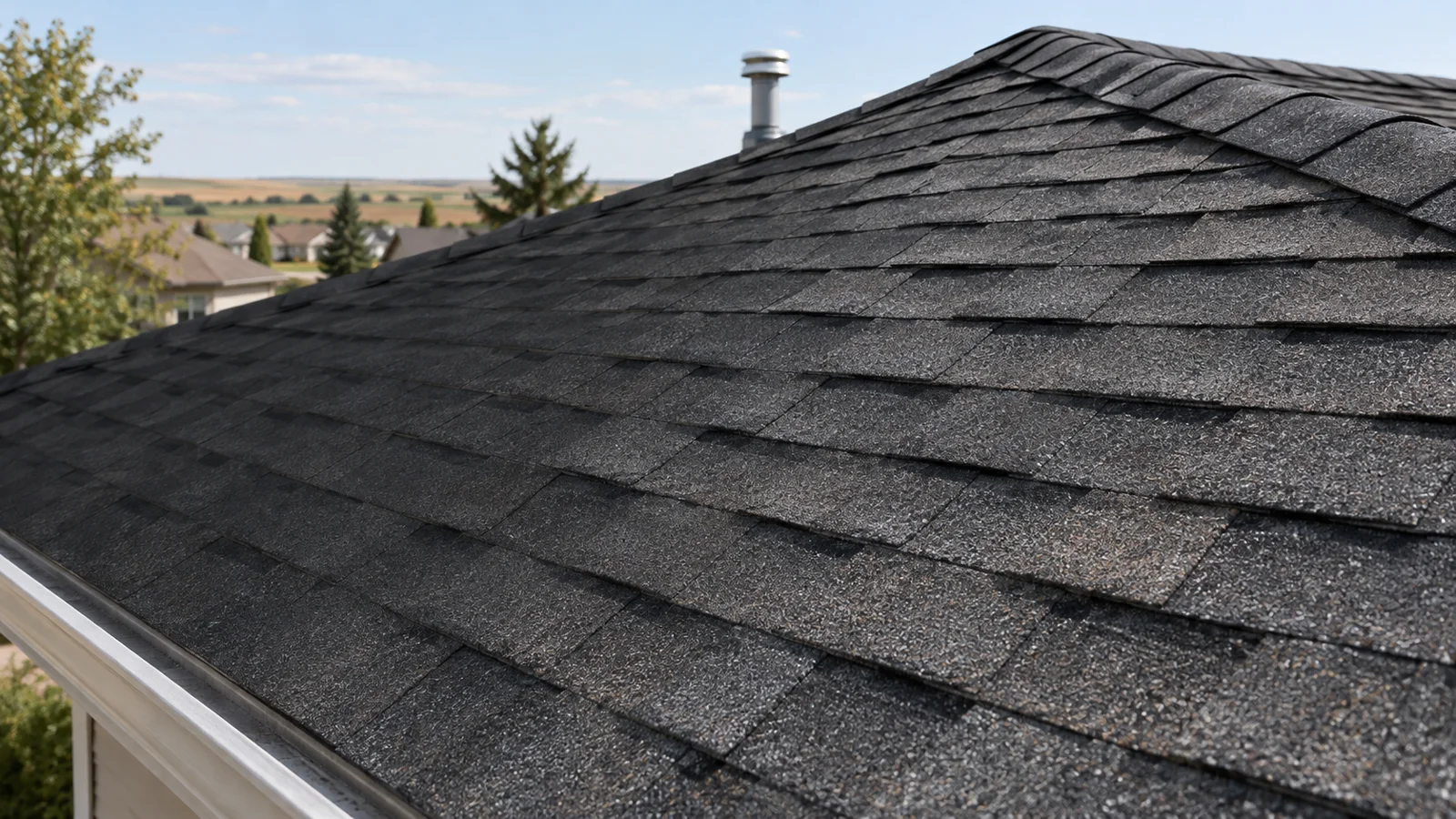
Fiberglass shingles are asphalt shingles. “Fiberglass” describes the reinforcing mat inside the shingle; asphalt and protective mineral granules are part of the same product. As the roof ages, the condition of all those layers matters more than the name alone.
An assessment can help you understand whether your roof needs maintenance, repair or replacement, and whether a particular rejuvenation treatment is even appropriate. A roof’s material alone does not establish eligibility.
What is a fiberglass asphalt shingle?
A typical fiberglass asphalt shingle combines three main layers:
ANATOMY OF A FIBERGLASS ASPHALT SHINGLE
Simplified cross-section · not to scale
- Mineral granules: The visible surface helps shield the asphalt from sunlight and gives the shingle its colour.
- Asphalt coating: The asphalt surrounds the reinforcing mat and contributes to water resistance.
- Fiberglass mat: Glass fibres form the reinforcing base of the shingle.
Think of these as parts of one shingle, not separate roofing choices. Older organic-mat asphalt shingles used a different reinforcing base. Product designs vary, so check your installation records or ask a roofer to identify yours. ARMA explains shingle construction; IKO describes the components.
Intact surface vs. exposed mat
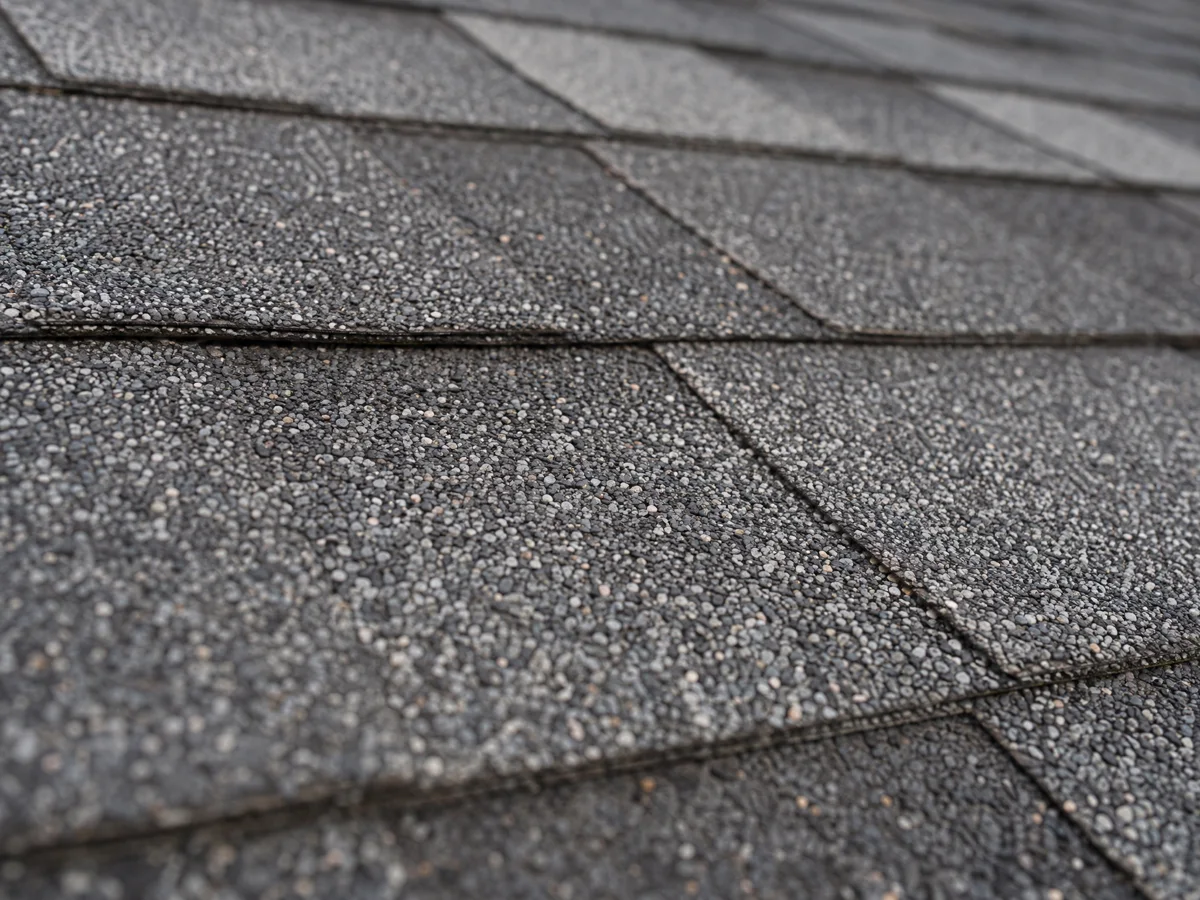
Intact surface: Granules cover the visible weathering surface. Some loose granules in a gutter do not automatically mean failure; excess granules can come off newer shingles.
Exposed mat: If wear or damage has reached the reinforcing mat, the shingle has lost material beyond its granular surface. Have a qualified roofer assess the area and recommend repair or replacement. A treatment cannot rebuild missing layers.
A dark patch can indicate exposed asphalt, while pale material may have several explanations. Photos alone are not a reliable diagnosis. Read our granule-loss guide for what to look for and when to seek an inspection.
How do these shingles age in Alberta?
Sunlight, weather, installation, ventilation and the roof’s exposure all influence its condition. Over time, a roof may show changes such as granule loss, brittle or cracked shingles, lifted edges, or missing pieces after wind or hail. These signs can have different causes, and they may appear unevenly across the roof.
A handful of loose granules is different from broad areas of exposed asphalt. Likewise, one lifted shingle does not establish the condition of the entire roof. Our curling and lifting guide explains those symptoms in more detail.
From the ground, look for visible changes and photograph them over time. Avoid climbing onto the roof to inspect or test the shingles yourself. If you see a leak, missing shingles or storm damage, arrange a qualified roofing inspection promptly.
Can fiberglass asphalt shingles be rejuvenated?
Bright Green Roof describes its treatment as an oil designed to penetrate aging asphalt and help shingles remain flexible. This intended benefit may be relevant to a roof that shows age-related stiffening but remains generally sound, with protective layers intact. The result depends on the specific roof and product, and a fiberglass mat alone does not establish eligibility. Ask for product-specific evidence and the reasons behind any recommendation; damaged areas may need repair or replacement.
Check the shingle manufacturer before treatment. The Asphalt Roofing Manufacturers Association (ARMA) strongly advises against field application of coatings or rejuvenators to installed asphalt shingles, citing possible harm to performance. ARMA advises homeowners to consult their shingle manufacturer about the specific treatment and check applicable local requirements. Read ARMA’s current statement and ask how the proposed treatment affects your shingle warranty and roof assembly.
Treatment is not a substitute for fixing a leak, damaged flashing, missing shingles, exposed mat or deteriorated decking. It cannot put lost granules or missing shingle material back. Where damage is isolated, a roofer may recommend a repair; where deterioration is extensive, replacement may be the appropriate option. ARMA discusses repairable shingle roofs.
For more on the proposed treatment process, see the science of roof rejuvenation. Evaluate product-specific claims and written terms for your own roof.
Questions to ask before deciding
- What shingle product is installed, and what does its manufacturer say about this specific treatment?
- Are the granules, asphalt and mat intact? Are there leaks, loose shingles or flashing problems?
- Which repairs are needed first, and are they included in the quote?
- What evidence supports the treatment’s expected results on a roof like mine?
- What do the written treatment terms cover, and how might they affect the existing shingle warranty?
- Would repair or replacement be a better choice, and why?
Get an assessment, then compare your options
If you are unsure what you are seeing, a local provider can help assess the roof and explain the next step. For leaks, exposed mat or significant damage, include a qualified roofing contractor in the decision. Bring any shingle paperwork and ask for the findings and recommendations in writing.
Find a Bright Green Roof provider in Alberta
Not sure whether to repair, preserve or compare replacement options? Try the Alberta Roof Planner for a personalized checklist and questions to bring to your local team.